Marco Moster
7000 calls a day. 3 QA analysts. 200 reviews a week. That's 97% of conversations you've never seen - and somewhere inside that 97%, patterns are forming right now.

7000 calls a day. 3 QA analysts. 200 reviews a week. That's 97% of conversations you've never seen - and somewhere inside that 97%, patterns are forming right now.
A sales operations manager running a 180-agent floor, doing around 7,000 calls a day, shared a problem that resonates with a lot of people in operations: their QA team of three was reviewing about 200 calls a week. Last quarter, two client complaints turned out to be patterns that had been happening for weeks - buried inside the calls they never got to review.
They had already hired a third QA person. It didn't help. Call volume grew faster. The question on everyone's mind: has anyone actually solved this without just keep hiring more QA people?
It resonates because it describes exactly what most operations managers are quietly living with. Not a bad team. Not a broken process. A math problem - one that no amount of hiring actually solves.
Here's why, and what you can do about it.
The challenge: catching bad conversations early
Your agents are your frontline, but they can also be your biggest risk. Common red flags that hide inside the unreviewed majority include:
If these aren't caught in time, the client escalates, makes a chargeback, or leaves. The cost isn't just the complaint - it's the pattern you never saw coming.
Why adding QA headcount doesn't scale
The instinct is understandable: call volume grew, so hire more QA. But consider the math. A thorough QA analyst reviews 40–60 calls a week. At 7,000 calls a day - 35,000 a week - you'd need hundreds of analysts just to hit meaningful coverage. And that's before accounting for every language your floor operates in.
Adding a third analyst didn't help. Because the problem isn't how good your QA team is. It's that they can't physically listen to what they can't physically reach.
The two complaints that slipped through weren't one-off errors. They were patterns - repeating for weeks, invisibly, inside the 97% no one reviewed. That's not bad luck. That's a structural blindspot.
The solution: a personal assistant for your call data
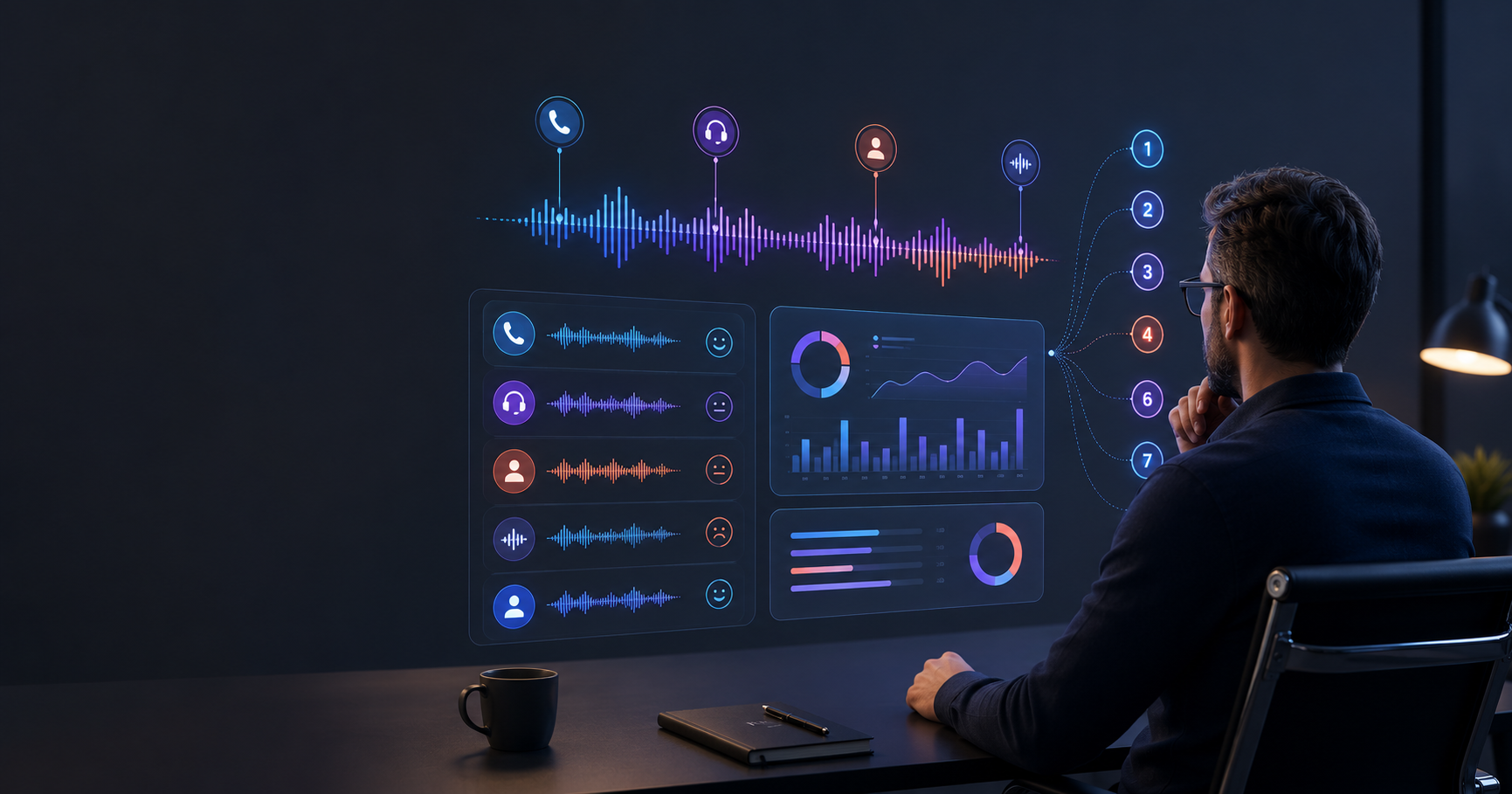
RoboNote acts as your personal assistant to take the large volume of data you have and tell you exactly where to put your attention.
Instead of listening to random calls, the system helps you ignore the noise and instantly identify whether you are looking at a clean conversation or a bad conversation. Every call gets scored - not just the 200 a week your team can manually reach.
How automated monitoring works in practice
We use a tool called Flows - an AI agent that checks all your conversations for you, automatically, against the specific criteria that matter for your operation.
1. Custom prompting for wrong or misleading informationThe AI is prompted to understand exactly what constitutes wrong or misleading information for your specific company -— your products, your regulatory context, your standards.
2. Green and red values - not just a scoreEvery flagged conversation gets a clear outcome so your team knows where to act.
3. Client vulnerability detectionIf a client indicates financial stress or says they cannot make another deposit, the system flags it automatically. Risk needs to know before the chargeback — not after.
4. The system learns by doingAs you review and verify flagged conversations, the AI extracts that information to improve future detection - catching similar patterns faster and more accurately over time.
What changes when you cover 100% of calls
Your QA team doesn't disappear - they get better. Instead of spending their time listening to random calls, they work from data. They know which agents need coaching, what specific behaviors to address, and exactly which conversations to pull.
Managers stop being call reviewers and become performance analysts. The coaching becomes targeted. The interventions happen before patterns cost you clients or compliance violations.
And for multilingual floors - if you operate across languages and can't review calls you don't understand, automated scoring means every language cohort gets the same QA standard. No structural blindspots based on what languages your human team speaks.
You get a dedicated view - whether we call it a Risk view or a Compliance view - that filters strictly for the conversations that need attention. Not noise. Not random samples. The ones that matter.
So - has anyone actually solved this?
Yes. And the answer isn't a fourth analyst.
It's scoring every call automatically, surfacing the patterns that were always happening in the 97%, and letting your QA team do the high-value work they were actually hired for: coaching, developing agents, and protecting the business.
That's how you do QA with 180 agents and a small team.
You want to elevate your call centre using AI?
Schedule a demo for Robonote
If you want to be a part of changing the way we work using AI, join us!
See our open roles here, we are hiring.
Read relevant article about AI, Robonote and our Founders. You can also find more article on our blog
Robonote is the AI sidekick that helps your team unlock the potential of your data. Start your journey today.